A headless festival platform for culture, one station away
Client
Linear Festivals
Year
2026
Industry
Arts + Culture / Events
Services
Design, Engineering, CMS, Motion
Visit
linearfestivals.com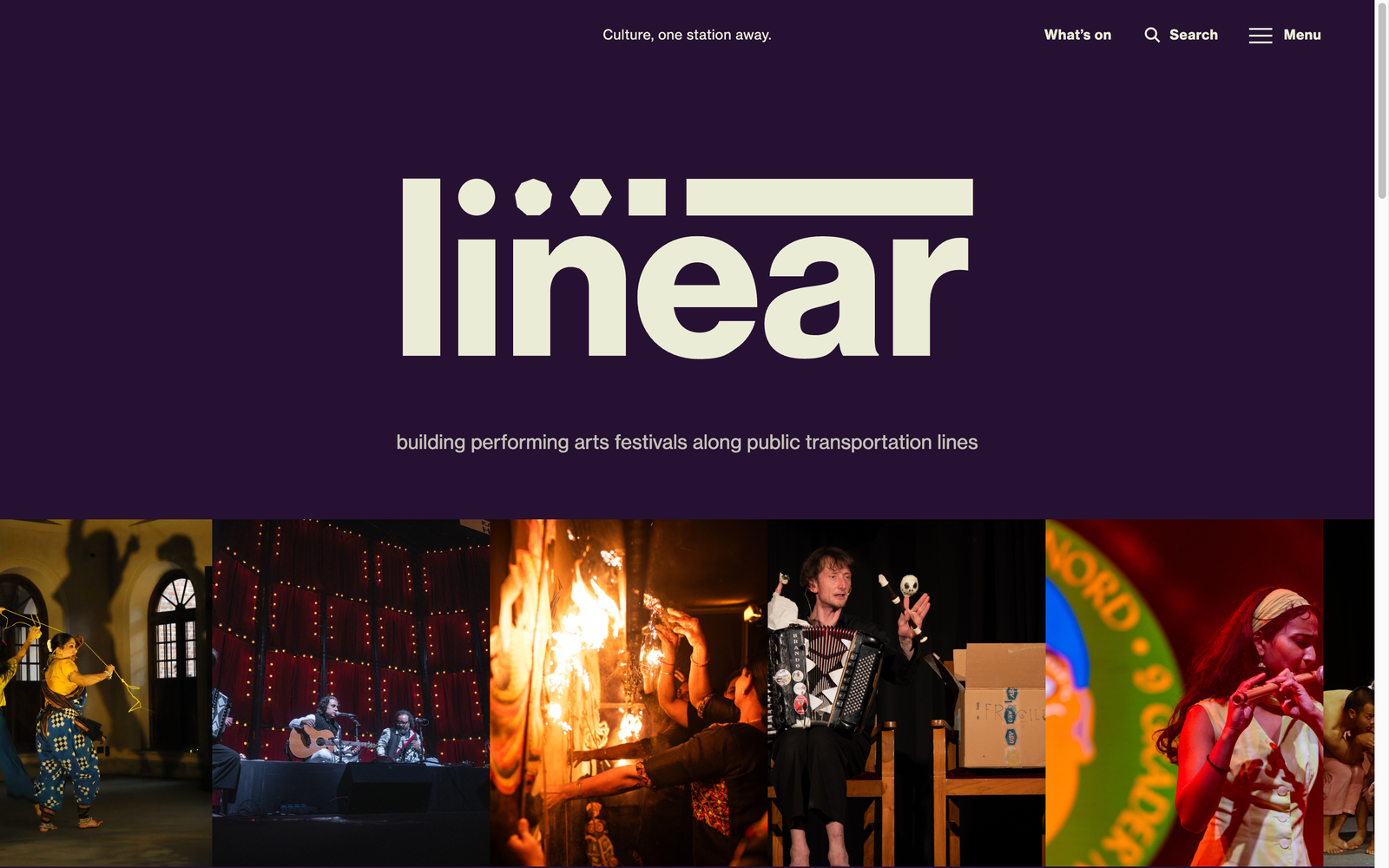
Linear Festivals, a custom, headless platform for discovering festivals along India's metro lines
Linear Festivals stages music, theatre, dance and arts festivals along the metro lines of Indian cities. They needed a website that could sell tickets, tell stories and run itself.
The brief was a single platform that worked two ways at once: a public-facing site for discovering events, artists and festivals, and an internal CMS the Linear team could run without ever calling a developer.
We designed and built it end to end, a fully custom, headless platform on Payload CMS and Next.js, with a drag-and-drop page builder, structured data for search engines, responsive image delivery and GSAP-driven motion on every page. One admin interface runs the whole thing.
Scroll-driven motion throughout: the festival page's smooth-scroll intro and the agenda-style event listing
The Challenge
A platform, not a brochure
Two products in one
Linear needed a polished public site and a capable internal tool. Events, festivals, artists and venues all relate to one another, and editing one shouldn't mean re-entering the others. An off-the-shelf site builder couldn't model those relationships.
Editors had to own the content
A small cultural team programmes dozens of events across cities. They needed to add a festival, drop in artists, embed a Spotify player and publish a whole landing page themselves, no tickets, no waiting on engineering.
The brand lives in motion
The Linear identity isn't static. The wordmark reveals letter by letter, festivals announce themselves along an animated metro line, event posters wipe into view. Delivering that on the web without janky scrolling was a real engineering problem.
Image-heavy, performance-sensitive
Festival sites are wall-to-wall photography. Served naively, that's a slow, expensive site. Every image needed to be the right size for its slot, on retina and mobile alike.
Discovery had to be effortless
Visitors arrive wanting to know what's on, in their city, this weekend. The data behind that (recurring dates, multiple venues, festival groupings) is messy, and it still had to filter instantly.
Goals
What success looked like
One admin to run everything
Events, festivals, artists, venues, cities, pages, posts and form submissions, all editable in a single Payload backend, with live preview straight to the real frontend.
Pages built like Lego
Marketing pages assembled from a library of content blocks. The team picks blocks, fills them in, reorders by dragging. No new pages need code.
Motion that never stutters
Signature animations (the hero carousel, the metro-line intro, poster wipes) running at 60fps, surviving client-side navigation, and degrading gracefully on mobile.
Fast images, found content
Responsive image delivery through a CDN, plus structured data so events and festivals surface correctly in search and on social.
Built with
01: Our Approach
A content model that mirrors how festivals actually work
We started with the data, not the design. Events are the core: each one carries multiple types, recurring occurrences with their own dates and times, artist relationships, venue assignments, festival grouping, booking links, media embeds and its own colour theme. Festivals group events. Artists, venues and cities tie back to both, and the system aggregates events and media to each artist automatically.
Modelling those relationships properly in Payload meant editors enter a fact once and it shows up everywhere it's relevant: an artist added to an event surfaces on the artist's own page without anyone touching it.
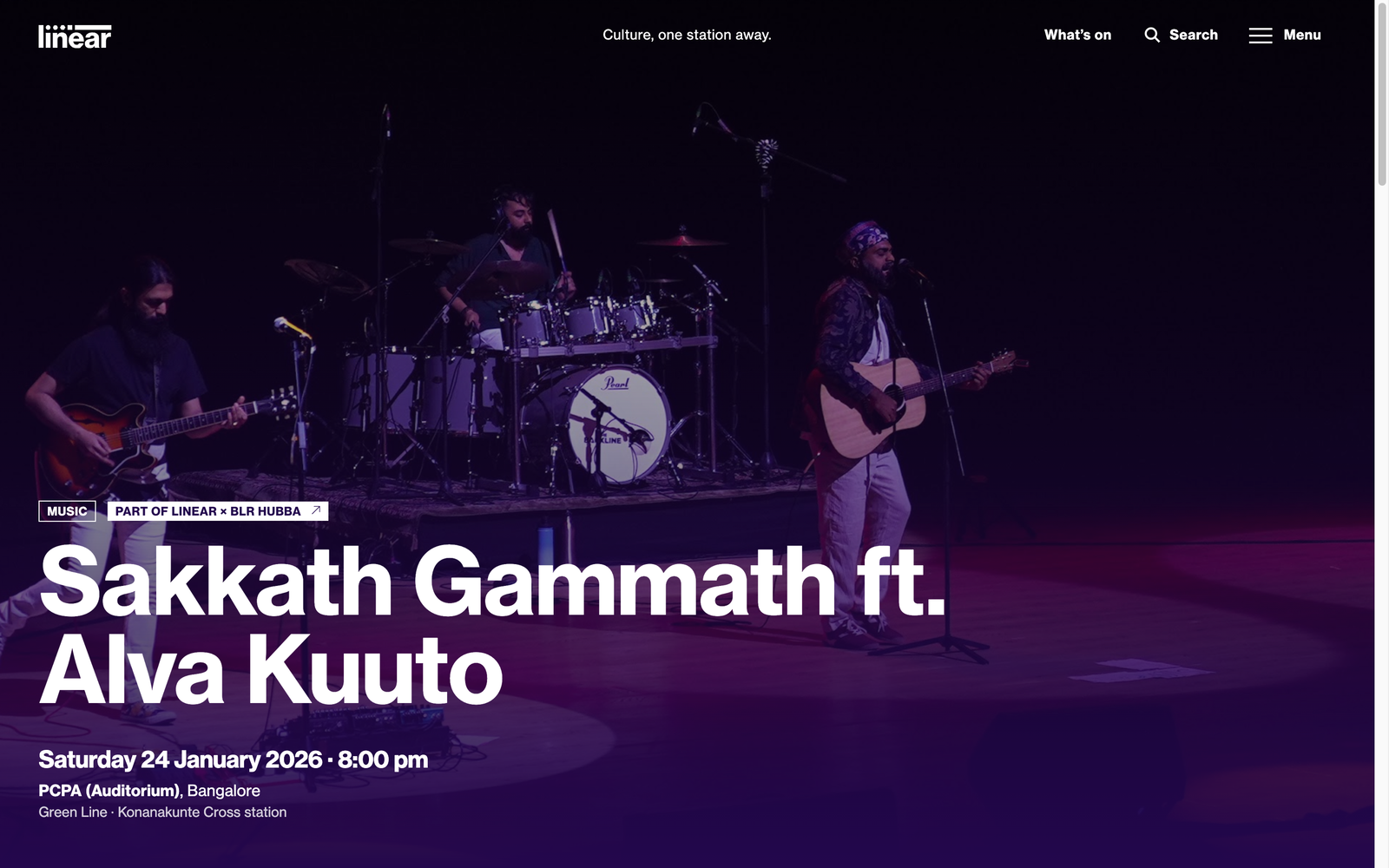
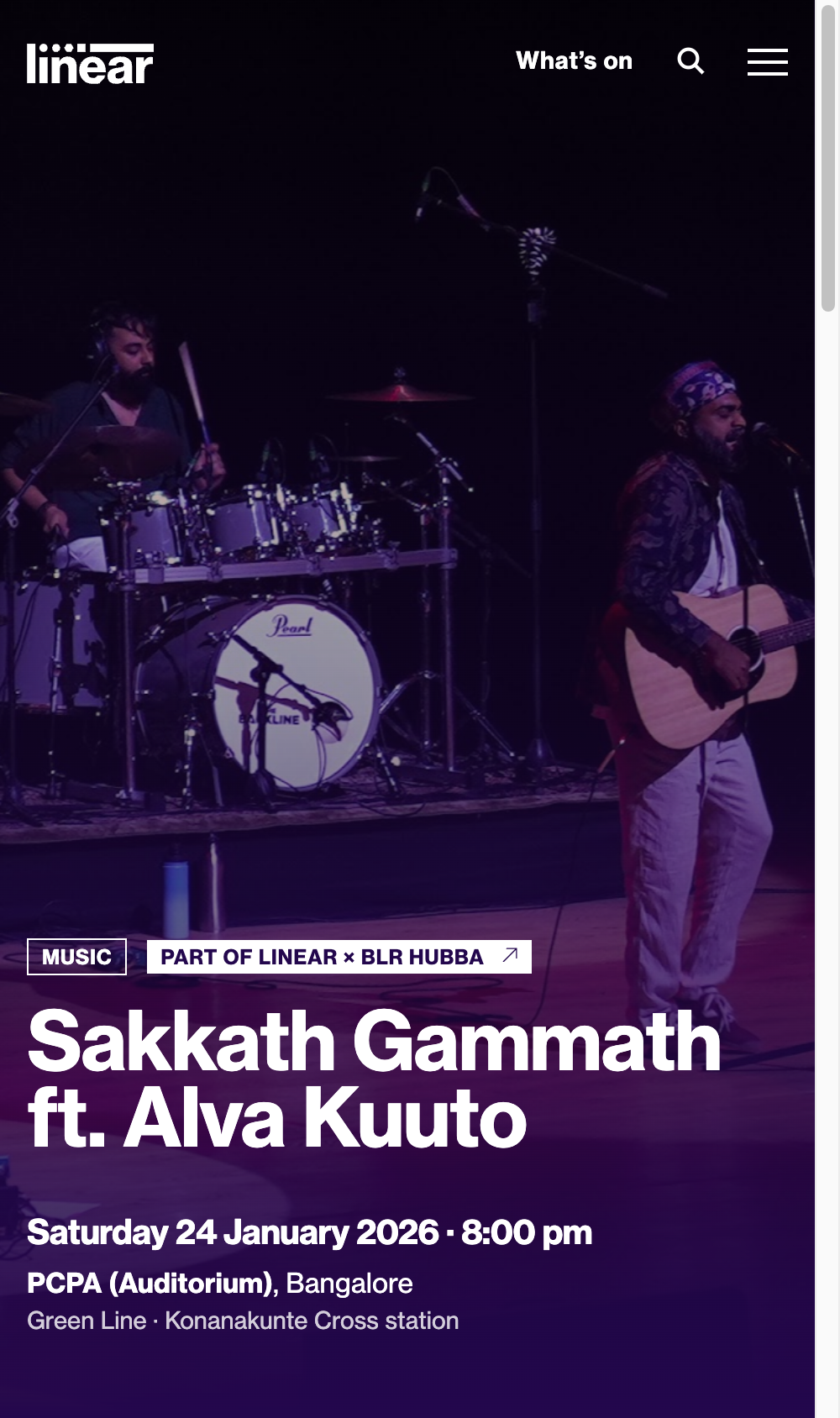
An event page: poster, per-event colour theme, venue and metro-line stop, all driven by one record
02: Our Approach
A page builder the team actually uses
Every marketing page is composed from a library of drag-and-drop blocks: heroes, a scroll-driven festival intro, featured-festival grids, auto-populating event listings, image-and-text layouts, galleries, team cards, blog teasers, contact forms and filterable archives for events, festivals, artists and venues.
Image, Image Grid and Image & Text blocks share a reusable filter field group (grayscale, contrast, brightness and colour overlays) so editors can art-direct without leaving the admin. The Linear team builds and reorders entire pages themselves; we just maintain the blocks.
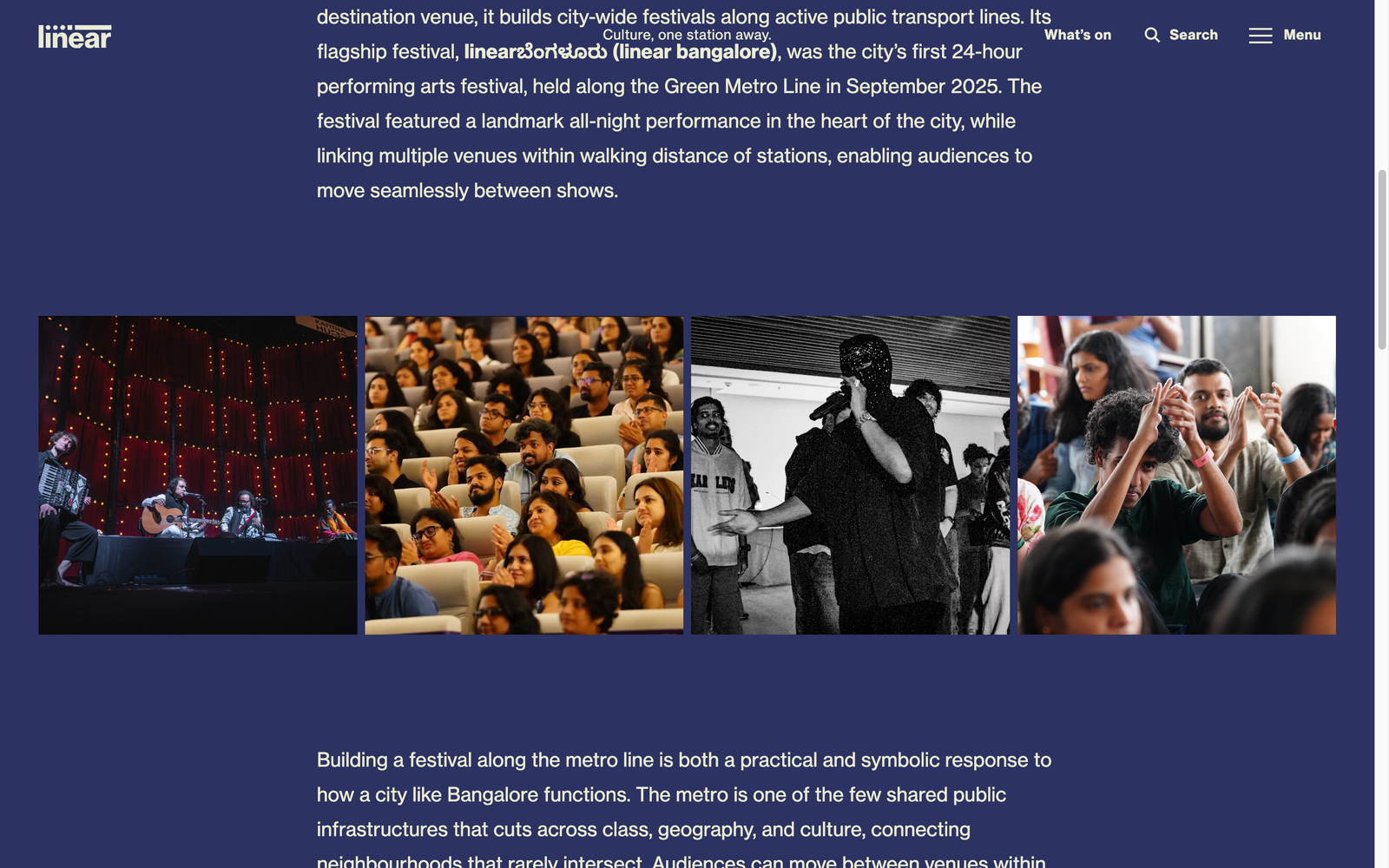
The about page, assembled entirely from page-builder blocks
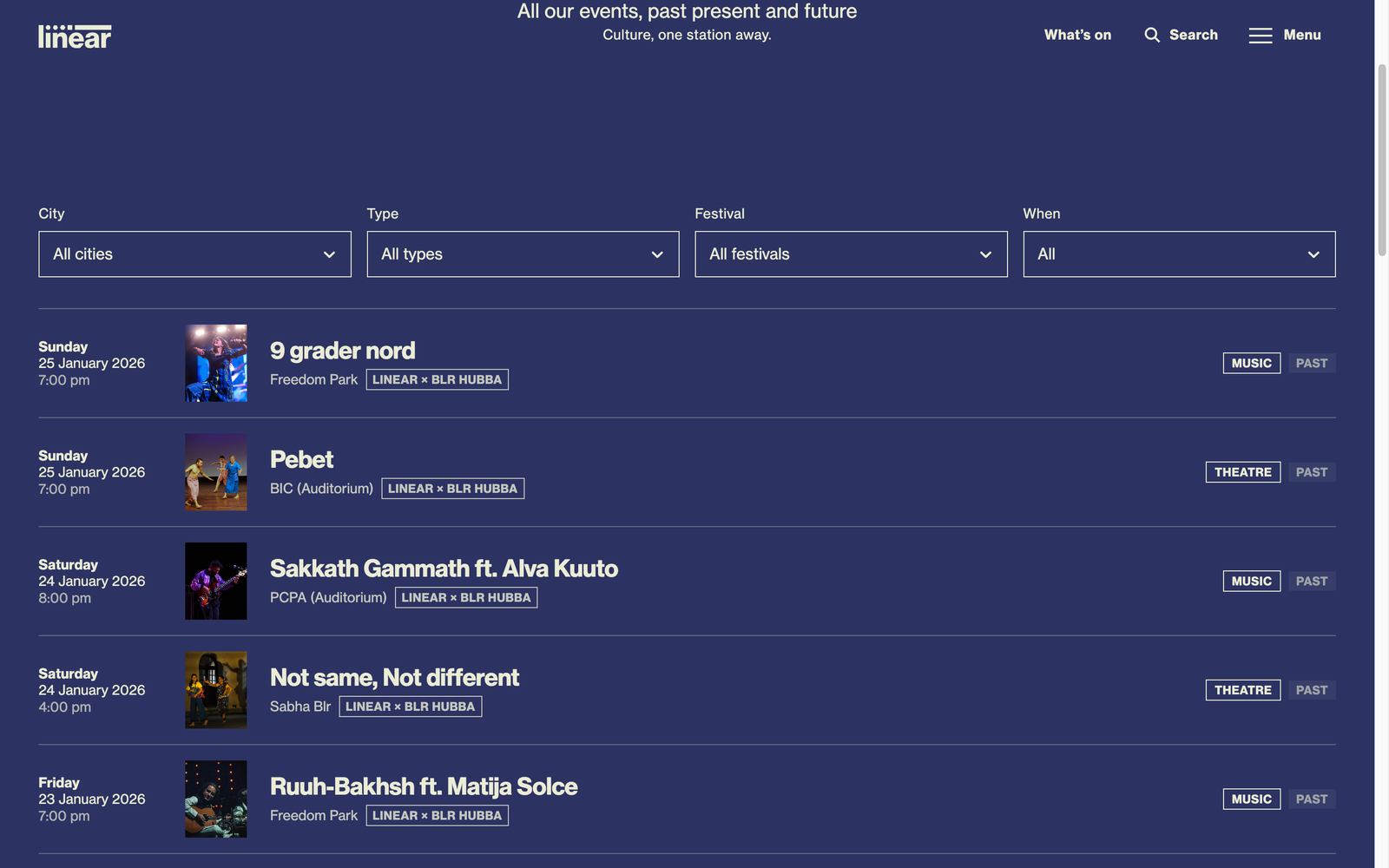
The Event Listing block: react-select filters that drive instant, URL-encoded navigation
03: Our Approach
Motion engineered to stay smooth
The brand demanded animation, so we built it with GSAP (ScrollTrigger, Draggable and InertiaPlugin) and tuned every effect to stay on the compositor. The hero is an infinite draggable carousel with inertia snapping and keyboard focus management; the centred card morphs from 4:5 to square as the backdrop crossfades behind the logo.
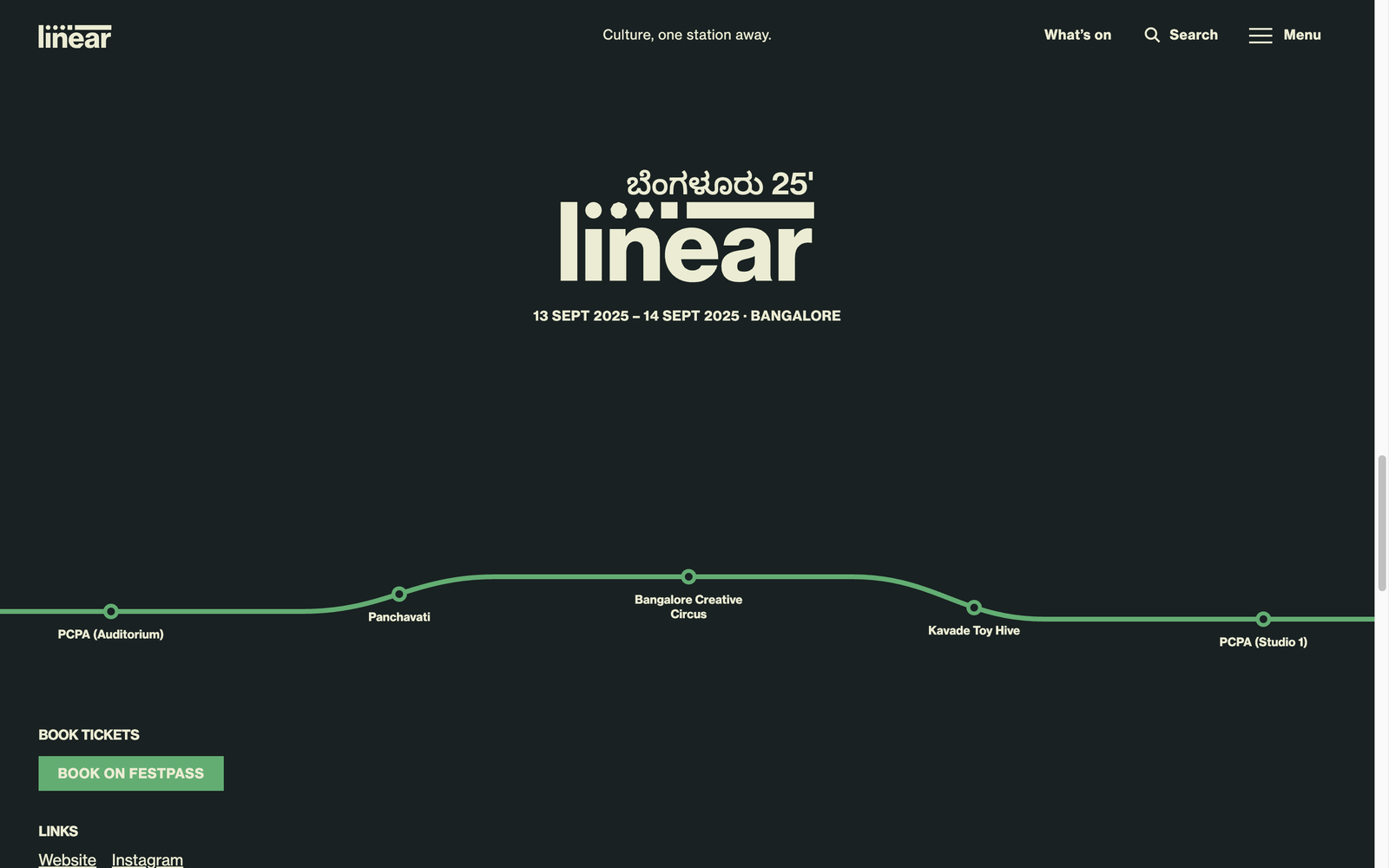
The festival intro pins a 400vh stage where image columns slide in, zoom and split to reveal the title, then a metro-line SVG draws itself with venue stops popping up along the path. Blur is set once, never tweened. Every component uses gsap.context with revert, so animations replay cleanly through client-side navigation instead of leaving stale inline styles behind.
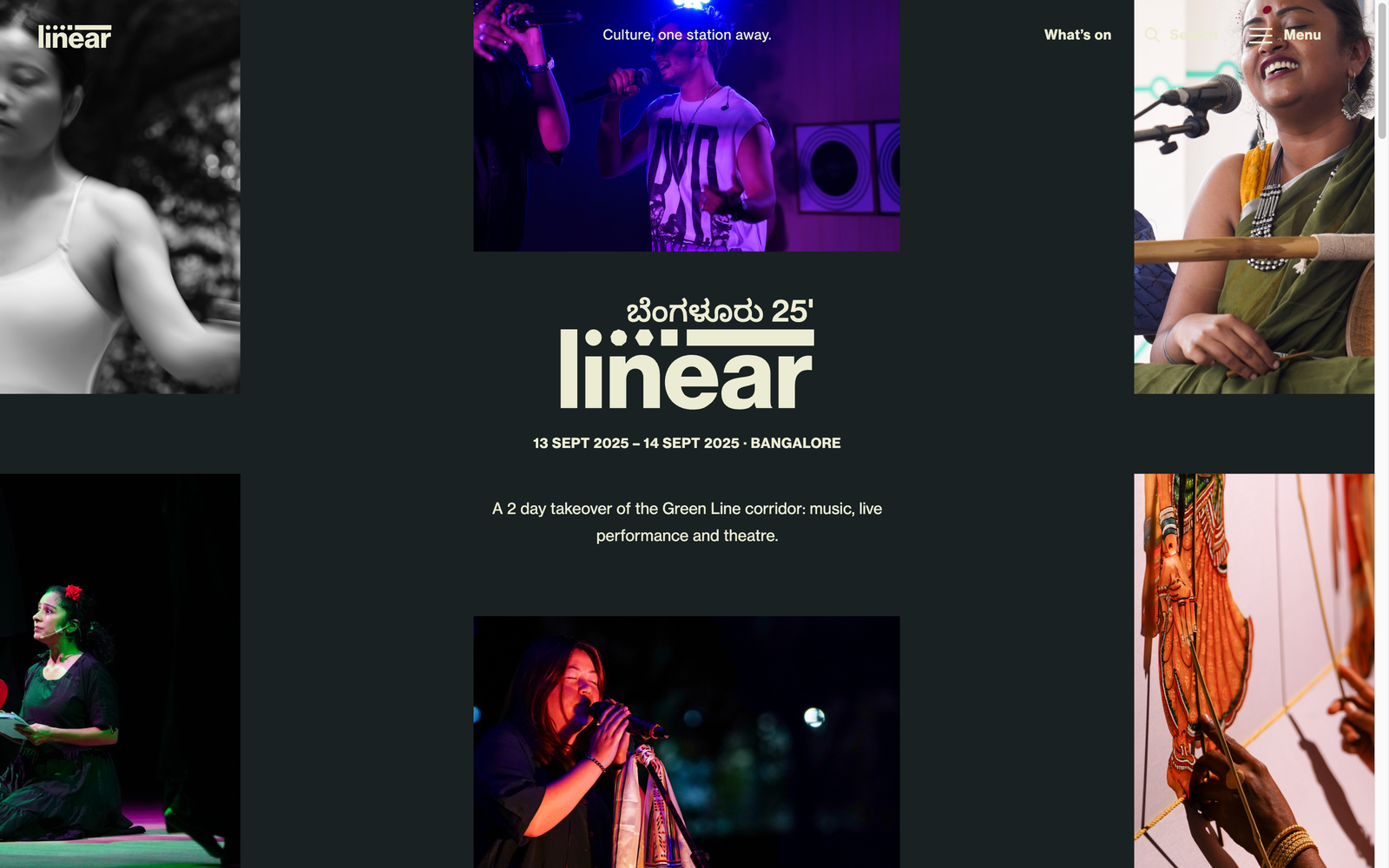
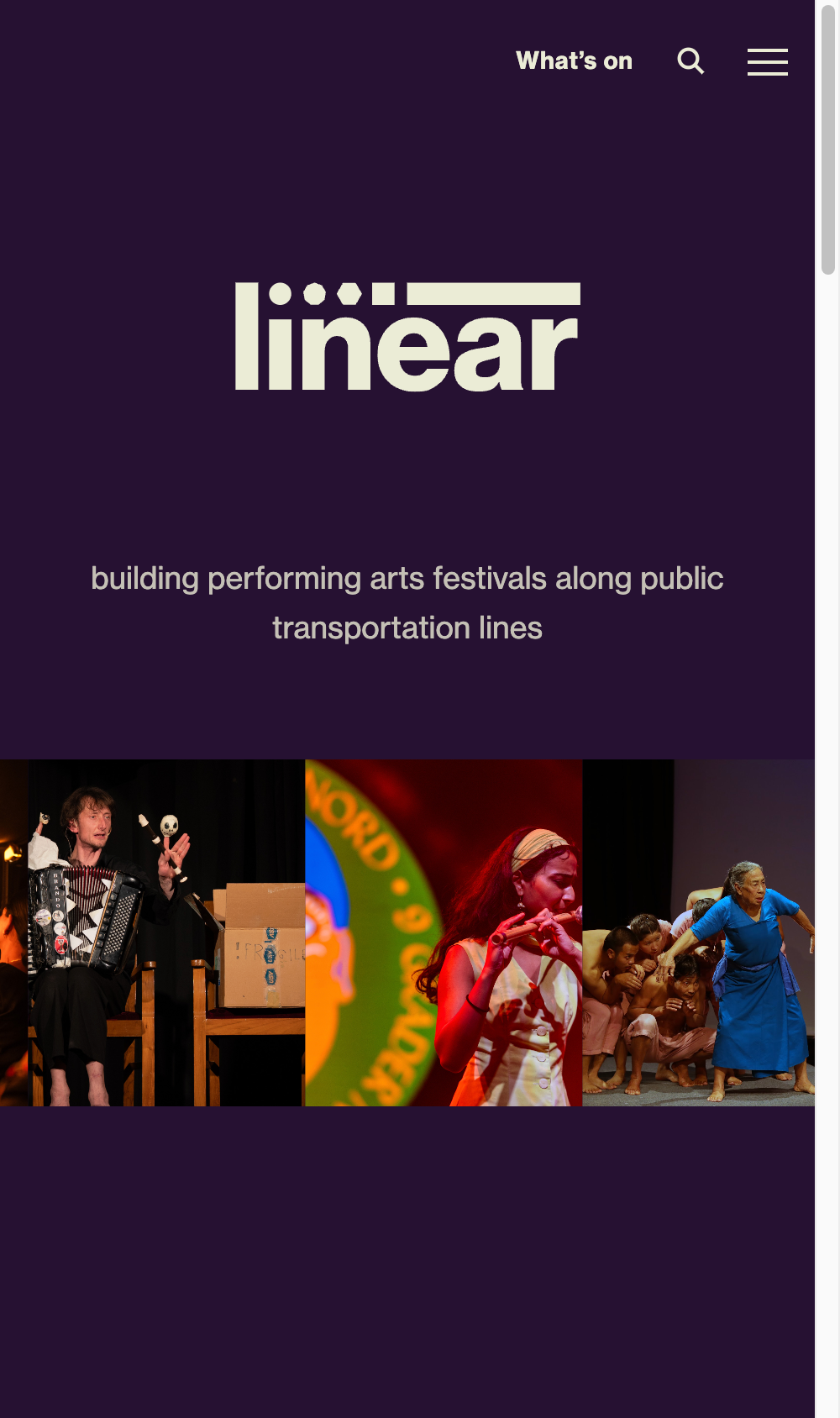
The festival hero: Linear logo with brandline over a scroll-reactive image grid
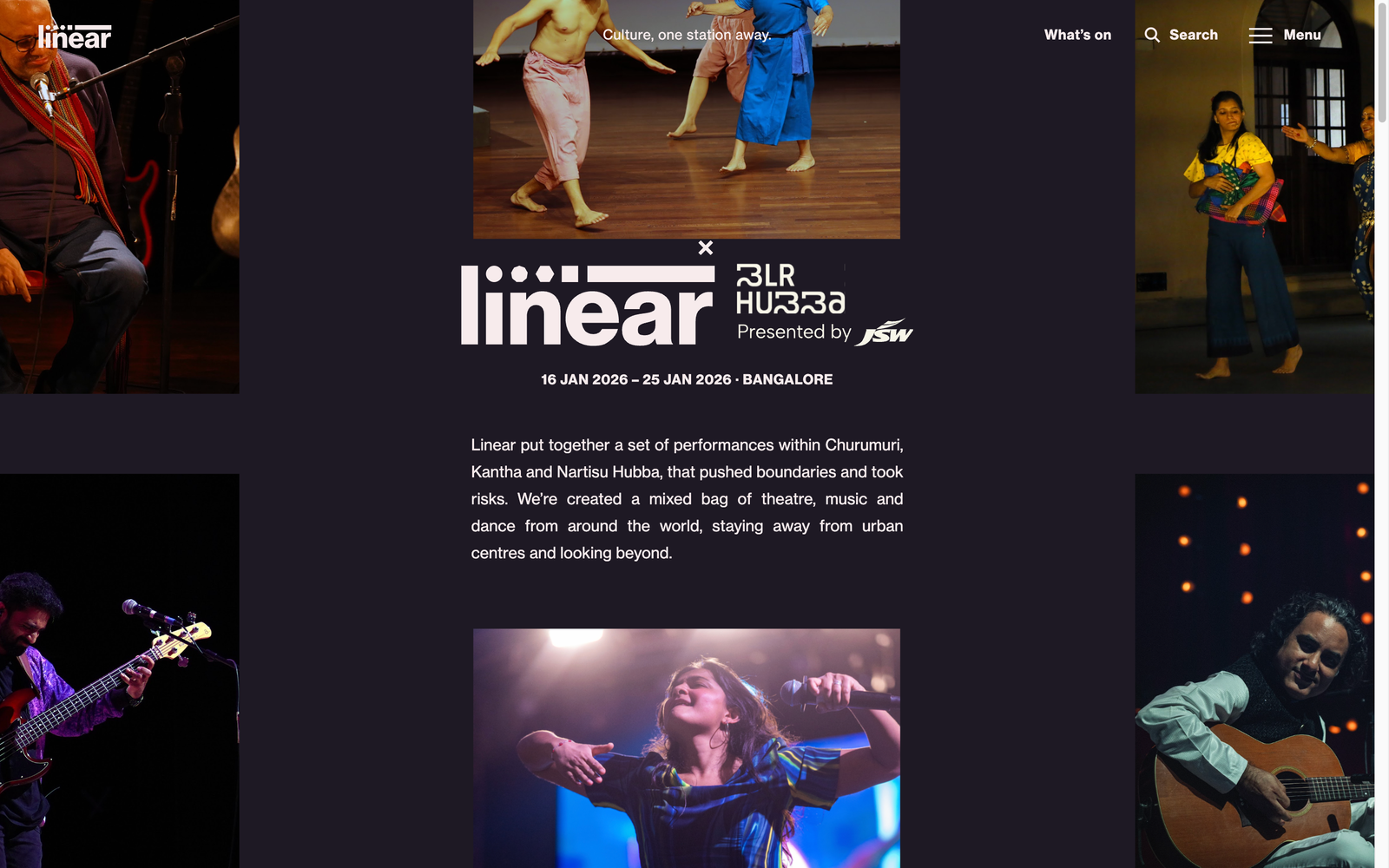
Display options handle co-presented festivals: partner logo with an 'x' separator
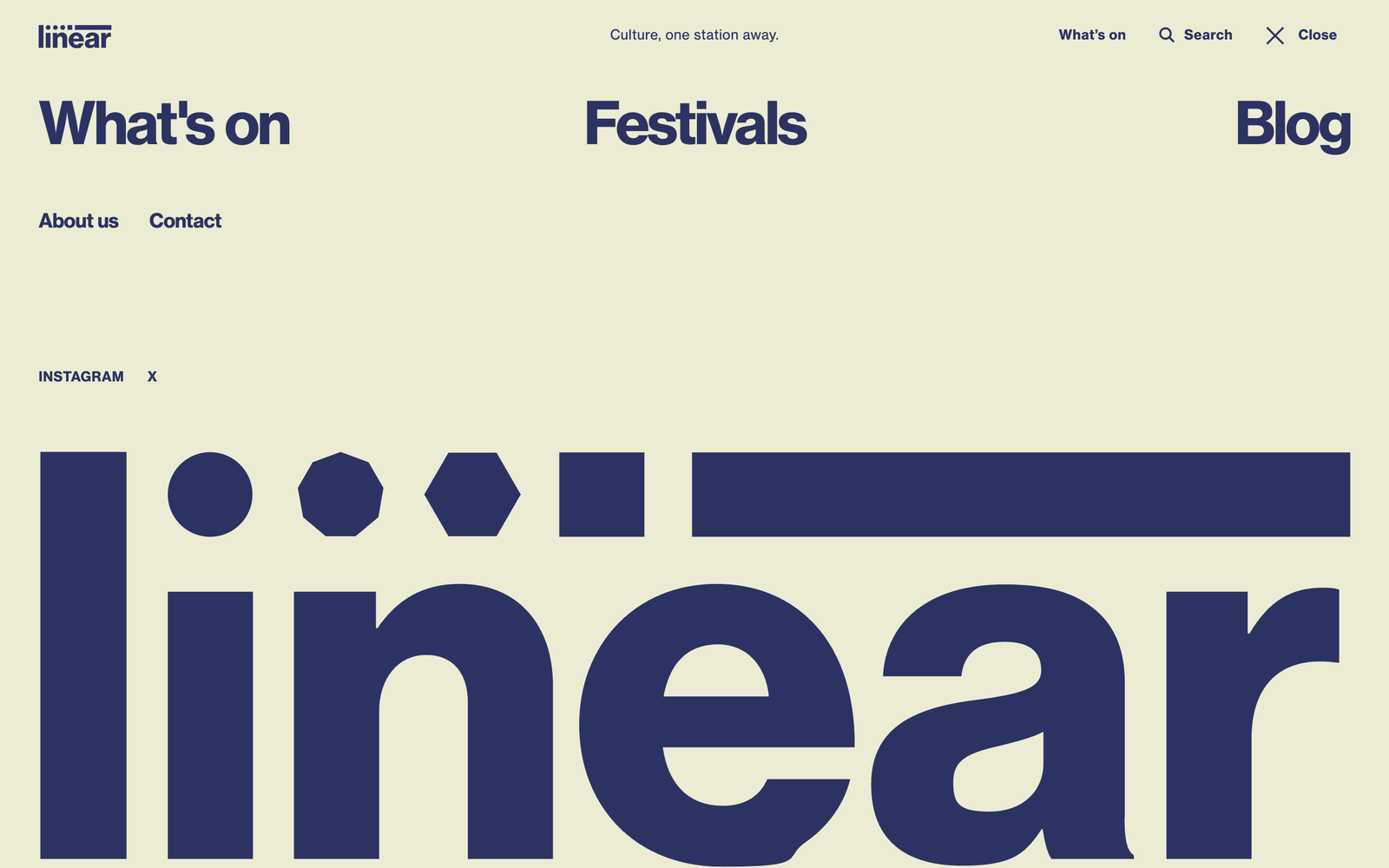
The wordmark intro: a per-letter clip-path reveal with elastic line-group motion, built in GSAP and tuned to stay on the compositor
What We Built
Drag-and-drop page builder
A library of 19 content blocks editors compose into any page: heroes, festival grids, listings, galleries, forms and filterable archives. New pages need no code.
Relational content model
Events, festivals, artists, venues and cities all reference each other in Payload. Enter a fact once; it appears everywhere it belongs, automatically.
GSAP motion system
Draggable hero carousel, scroll-driven metro-line intro, poster wipes and a footer wordmark that animates into view, all compositor-friendly and remount-safe.
Instant event discovery
Filterable archives for events, festivals, artists and venues with react-select dropdowns. Filters write straight to the URL, no submit button, fully shareable.
Responsive images via Bunny CDN
Every image emits 1x and 2x variants with size presets and sizes hints, served through Bunny CDN with on-the-fly resizing. Lazy-loaded and async-decoded throughout.
SEO & structured data
Auto-generated Open Graph and Twitter tags, plus schema.org Event and Festival JSON-LD with performers, venues, offers and date ranges. Plugin-managed redirects handle slug changes.
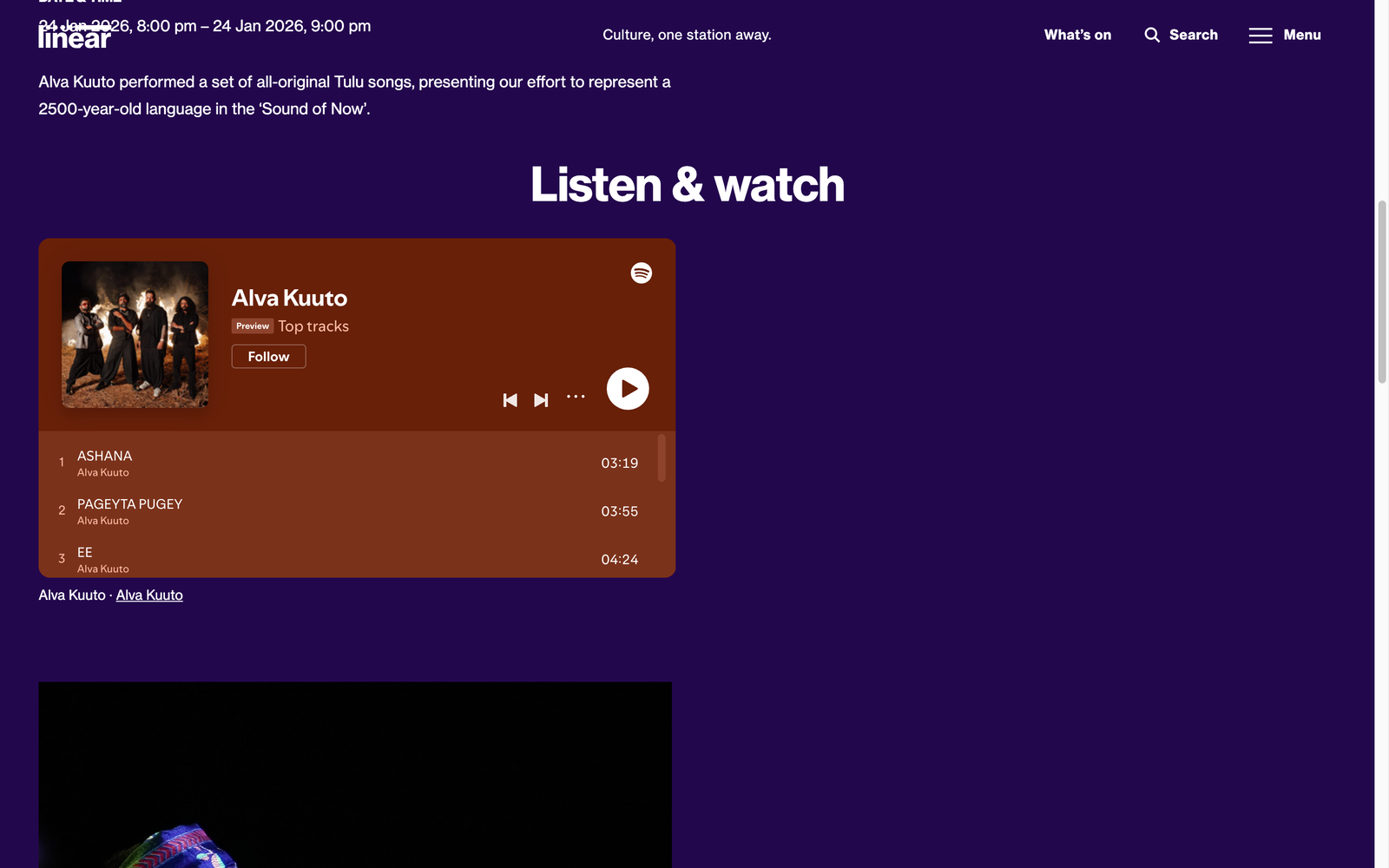
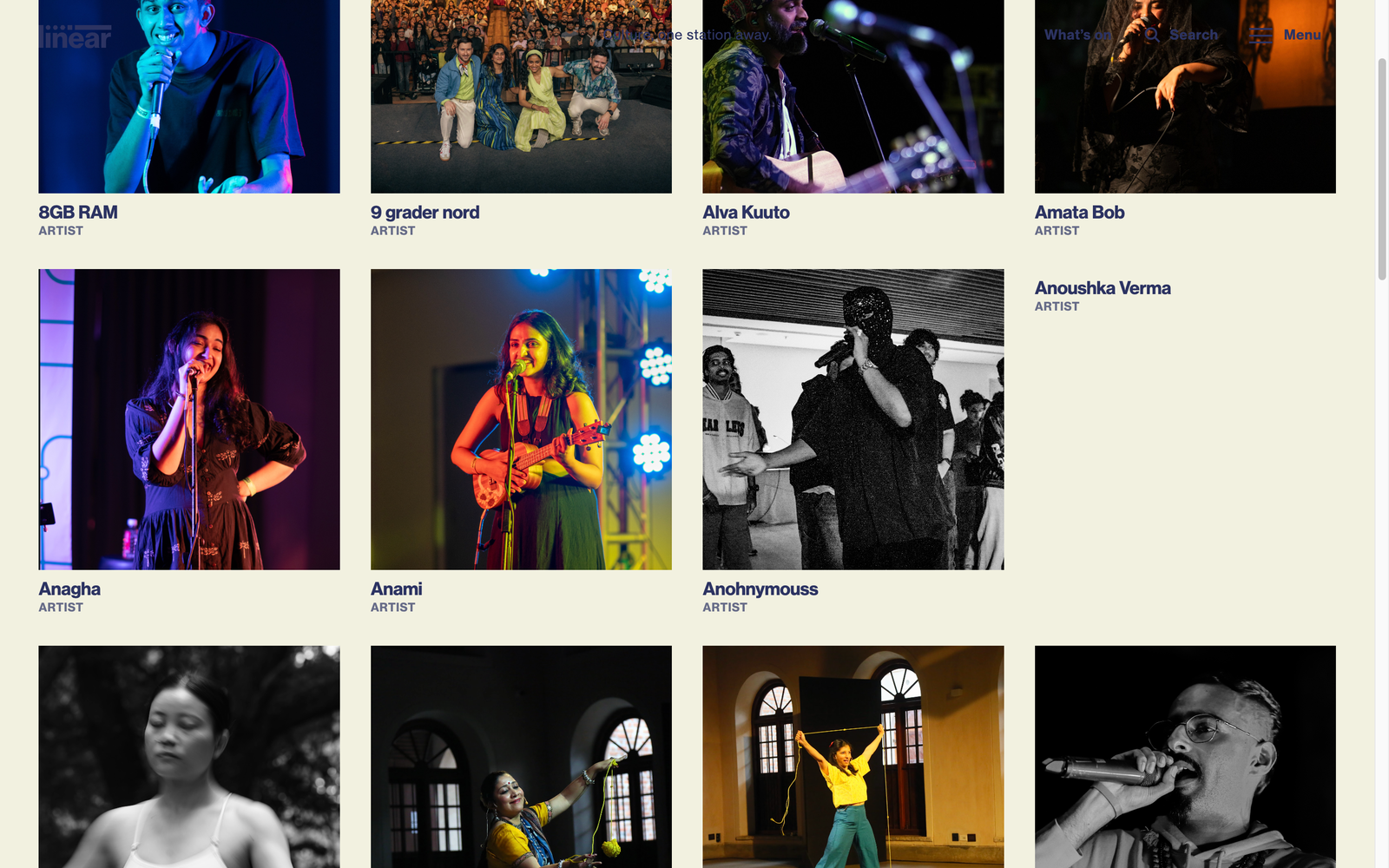
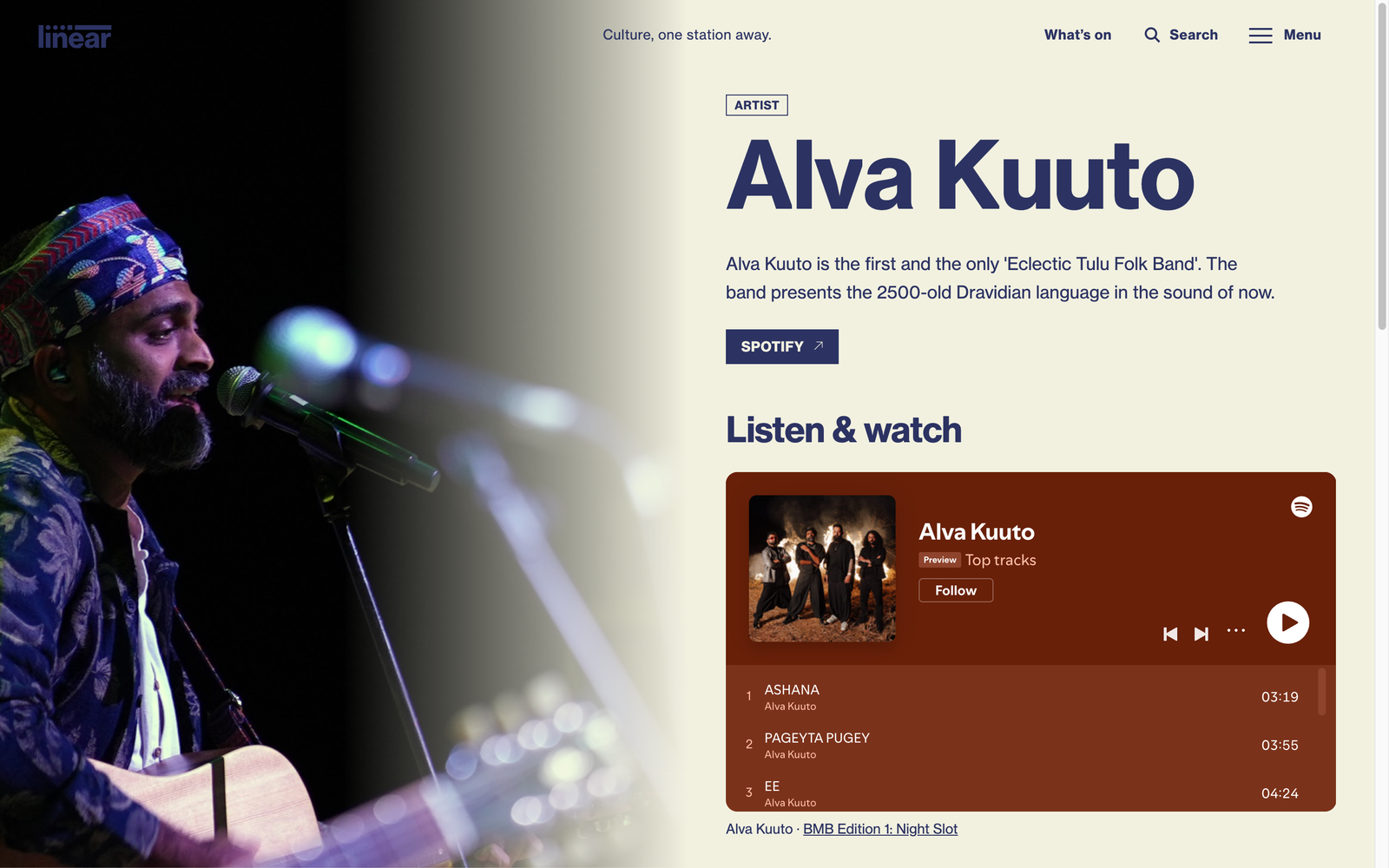
Inline media embeds aggregated onto event and artist pages, and the filterable artist grid
Results
Linear Festivals now runs on a platform that matches its ambition. The team programmes festivals, events and artists from a single admin and publishes complete pages themselves. Visitors browse what's on by city, type and date, watch and listen to artists without leaving the page, and book through a ticker that's never more than a tap away. And the whole thing moves like the brand it represents.
A site the team runs without us
Events, festivals, artists, pages and posts are all edited in one Payload admin with live preview. New landing pages are built from blocks, no engineering in the loop.
Signature motion, no jank
The draggable hero, 400vh metro-line festival intro and poster wipes run smoothly and replay cleanly through navigation, because animation was treated as an engineering discipline, not a finishing touch.
Discovery that takes seconds
Filterable, URL-encoded archives let anyone find what's on in their city this weekend and share the exact view. A ticket ticker keeps the next event one tap from booking.
Fast, findable, future-proof
Responsive Bunny CDN delivery keeps an image-heavy site quick, while Event and Festival structured data makes every page legible to search engines and social platforms.
“The fact that we've spent the bulk of our last board meeting just admiring our own website speaks volumes about the product Little Tiger delivered.”
Lessons
Model the domain before you design the pages. Getting the relationships between events, festivals, artists and venues right in Payload first meant the whole frontend (and every page builder block) fell out of the data cleanly.
Treat animation as engineering. Never tween blur on big elements, set it once; batch GSAP's layout reads and writes; and revert every context on unmount. Those few rules are the difference between a brand that moves and a site that stutters.
Build for the editor, not just the visitor. A page builder is only a win if the team reaches for it instead of asking for a developer. Shared, well-labelled blocks and live preview are what make that happen.
Performance is a content-strategy decision. On a photography-led site, responsive image delivery isn't an optimisation you bolt on at the end; it's the architecture you start from.
Need a platform your team can actually run?
We design and build headless sites that are a joy to use front and back: fast, animated, and editable without a developer. Let's talk about yours.