Frontend engineering + design services
Pixel-perfect React and Next.js development, design systems and headless CMS platforms. Built for performance, editorial independence and long-term scale.




React, Next.js and headless CMS development, from design to production
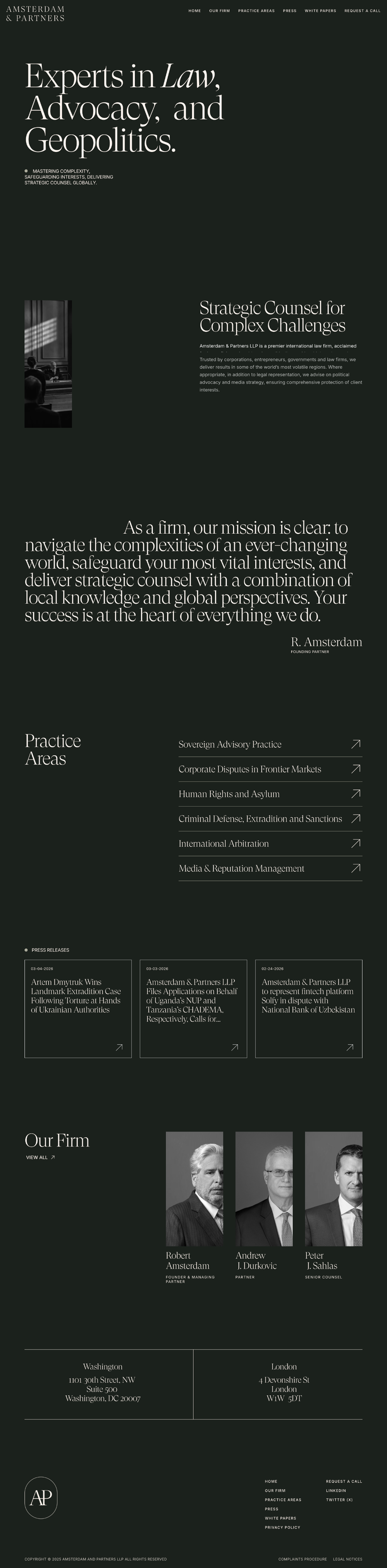
Little Tiger is a frontend engineering agency that builds high-performance web applications with React, Next.js and modern headless CMS platforms like Storyblok and Contentful. We deliver pixel-perfect UI development, component-driven design systems and editorial workflows that give your content team full independence, as we did for Amsterdam & Partners and Anderson Publishing.
Our frontend development services cover the full stack: server-side rendering, static site generation, API orchestration, GSAP and Framer Motion animation, accessibility compliance and Core Web Vitals tuning. Every project is built to your exact design specifications. No templates, no compromises.
<1s
Average page load times across client projects
95+
Lighthouse performance scores as standard
100%
Pixel-perfect fidelity from Figma to production
0
Developer tickets needed for content updates
Why invest in frontend engineering
First impressions are permanent
Your interface is your brand's handshake. Slow loads, janky animations and inconsistent UI erode trust before users read a single word.
Design without engineering is vapourware
A beautiful Figma file means nothing if it ships with compromises. Pixel-perfect engineering ensures the final product matches the original vision, down to the last detail.
Editorial teams need independence
Content bottlenecks kill momentum. Headless CMS architecture gives your editorial team full publishing control without filing developer tickets.
Performance is a competitive advantage
Sub-second page loads, strong Core Web Vitals and server-rendered content directly impact conversion rates, SEO rankings and user retention.
Technical debt compounds silently
Poorly structured frontends become expensive to maintain. A clean component architecture and design system pays dividends every time you ship a new feature.
Accessibility is non-negotiable
WCAG-compliant, keyboard-navigable, screen-reader-friendly interfaces are a legal and ethical baseline that expands your audience.
Integrations and Platforms
React + Next.js Development
Component-driven applications built for scale
We build with React and Next.js as our core stack, using server components, incremental static regeneration and edge rendering to deliver fast, SEO-friendly applications.
Every project gets a modular component architecture designed for reuse, testability and long-term maintainability. Whether you need a marketing site, a content platform or a complex web application, the foundation is built to grow with you.
Server-rendered Next.js application with dynamic content loading
Headless CMS Integration
Publish independently, without developer support
We architect headless CMS platforms (primarily Storyblok and Contentful) that give editorial teams full control over content without sacrificing frontend performance or design fidelity.
Structured content models, visual editors, draft preview modes, webhook-driven cache invalidation and modular page builders. Your team publishes on their own schedule.
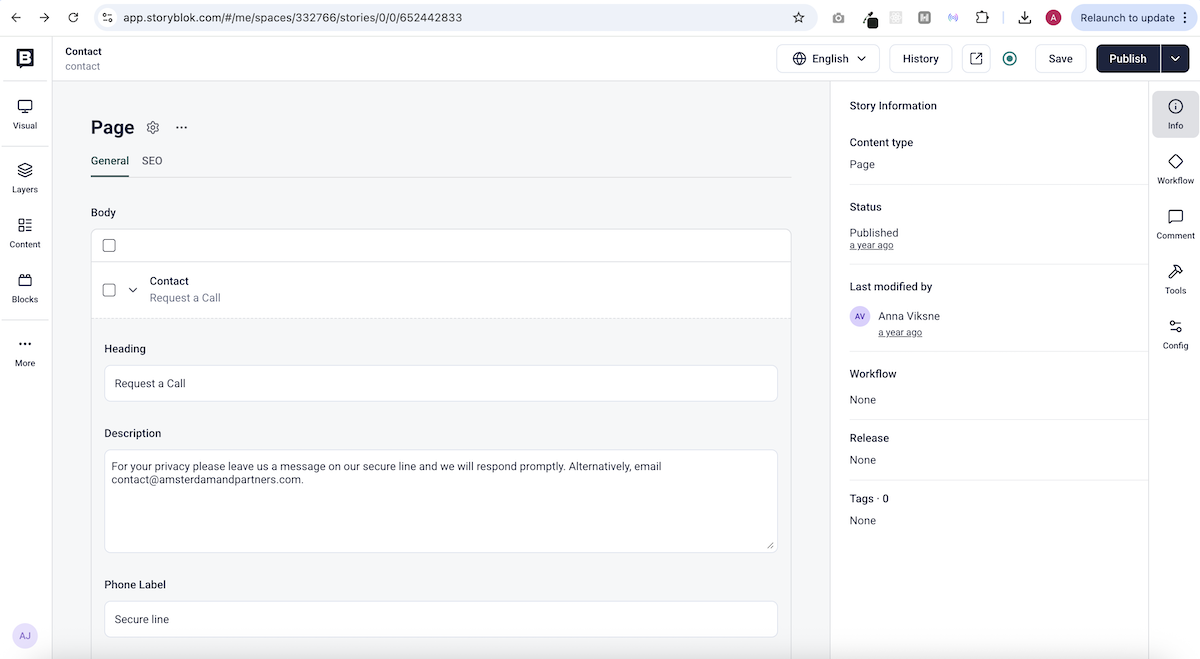
Visual editing in Storyblok with structured content models
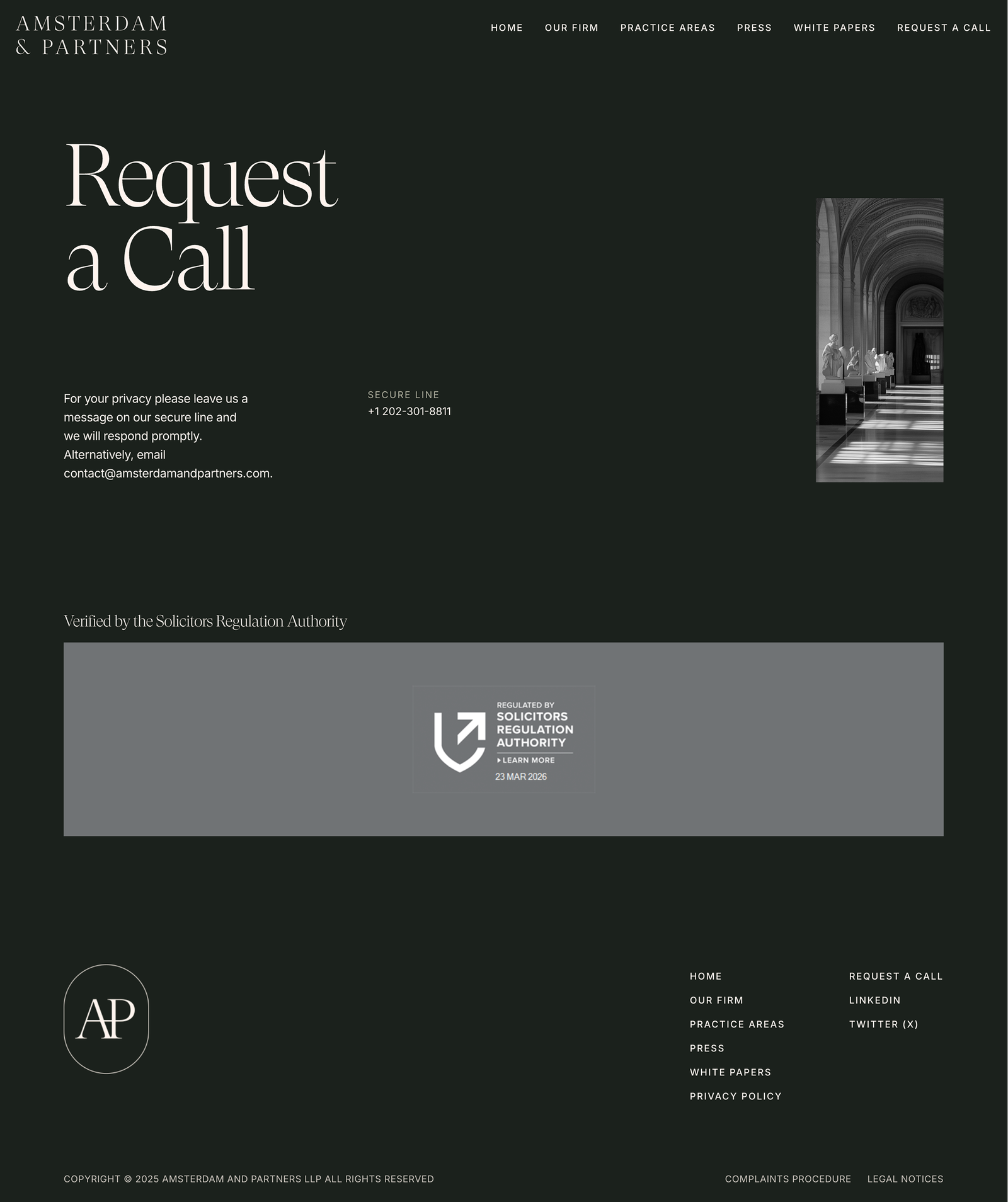
Editorially independent press release management
Design Systems
Consistent UI from a single source of truth
We build component libraries and design systems that bridge design and engineering: shared tokens, responsive typography scales, spacing systems and interactive states documented in Storybook.
The result: faster iteration, fewer inconsistencies and a codebase where every new feature builds on a proven foundation rather than starting from scratch.
Design system tokens applied consistently across every component
Animation + Motion Design
Motion that feels intentional, not decorative
We develop animation systems using GSAP, Framer Motion and CSS transitions: scroll-triggered reveals, page transitions, hover interactions and micro-animations that reinforce your brand's personality.
Every animation is performance-tested and purpose-driven. Movement guides attention, signals interactivity and creates the feeling of craft that separates premium experiences from templates.
Refined hover states with GSAP-driven transitions
Subtle motion cues that guide user attention
Performance is baked in from day one
We don't tune performance after the fact. It's an architectural decision from the start. Image compression, code splitting, lazy loading, edge caching and Core Web Vitals monitoring are standard on every project.
The result: sub-second page loads, strong SEO foundations and an experience that feels instant on every device and connection speed.
Selected work
Frontend engineering projects
Amsterdam + Partners
Headless CMS / Corporate Platform
2025
Amsterdam + Partners
Headless CMS / Corporate Platform
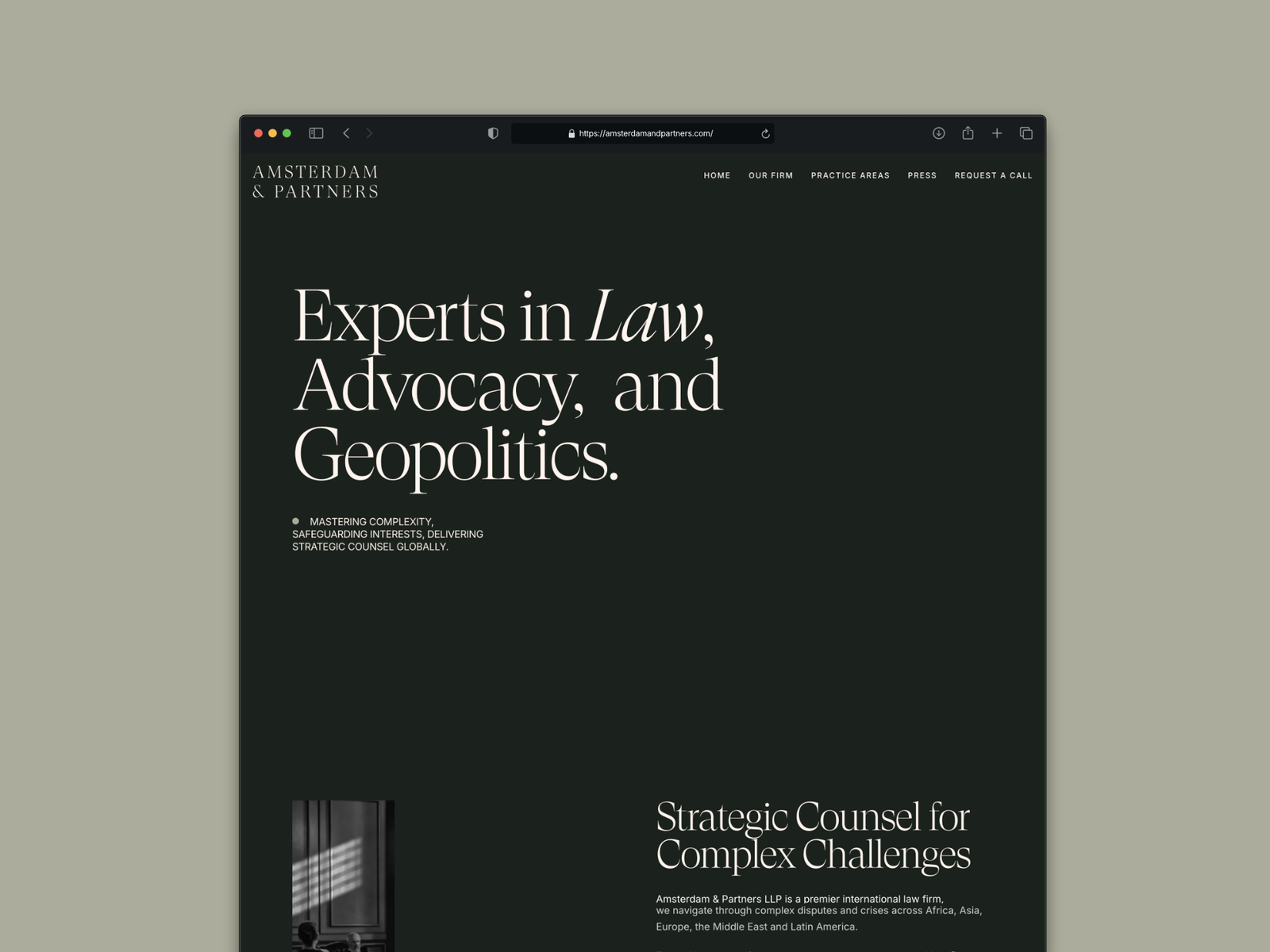
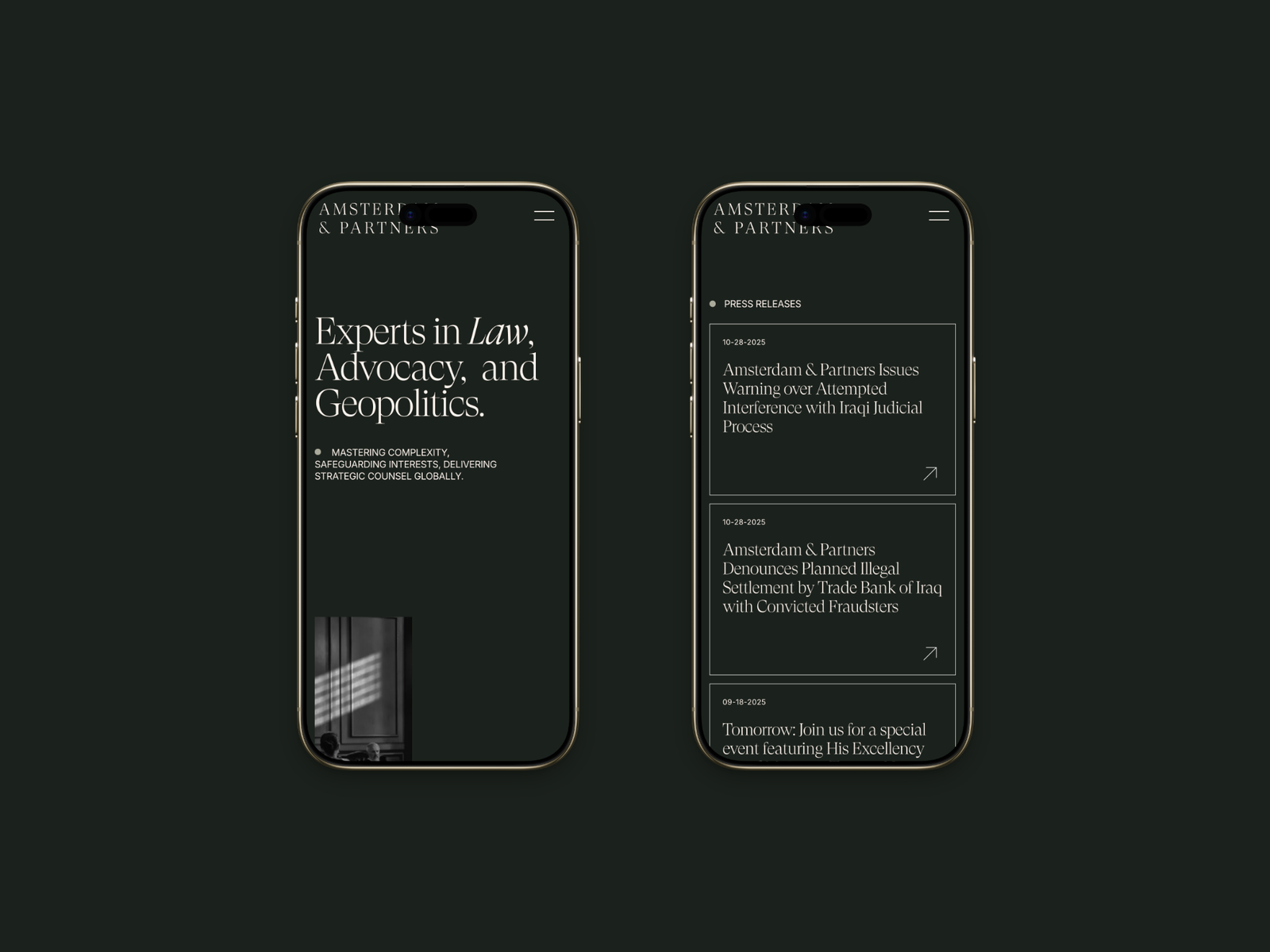
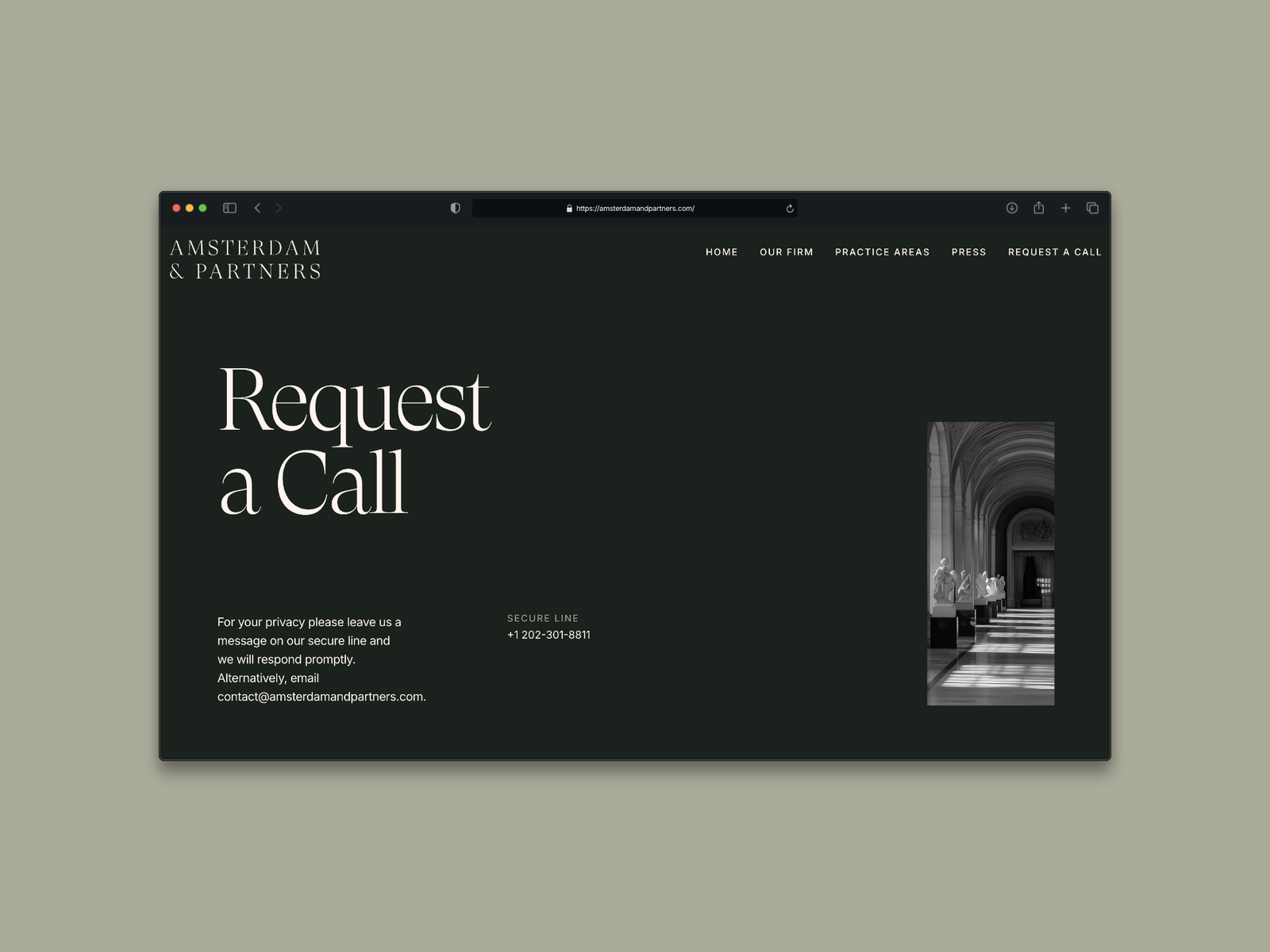
Premium headless Next.js platform for an international law firm. Storyblok CMS, GSAP animations, editorial independence, sub-second page loads.
Anderson Publishing
Publishing Platform / JATS XML
2025
Anderson Publishing
Publishing Platform / JATS XML
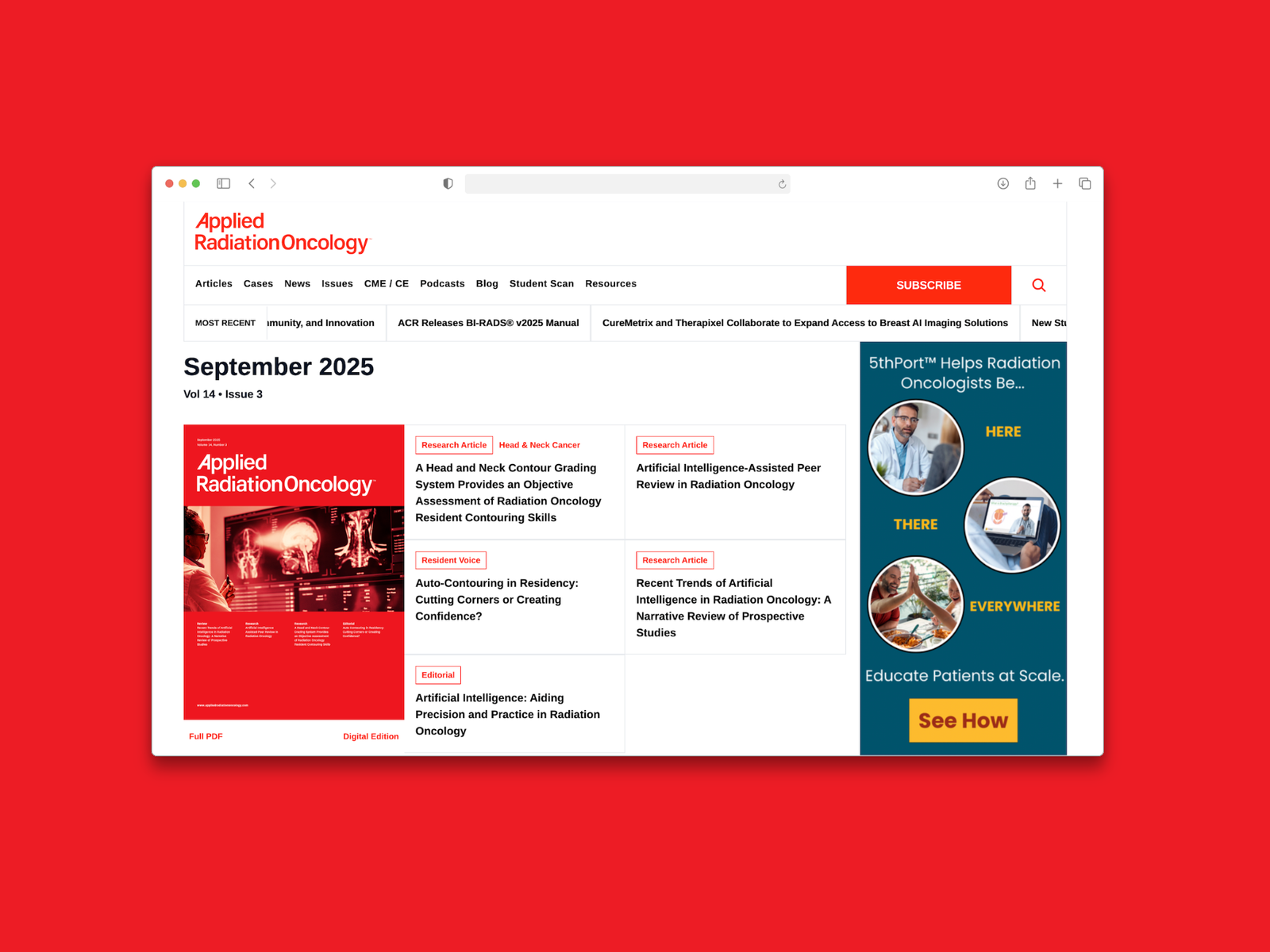
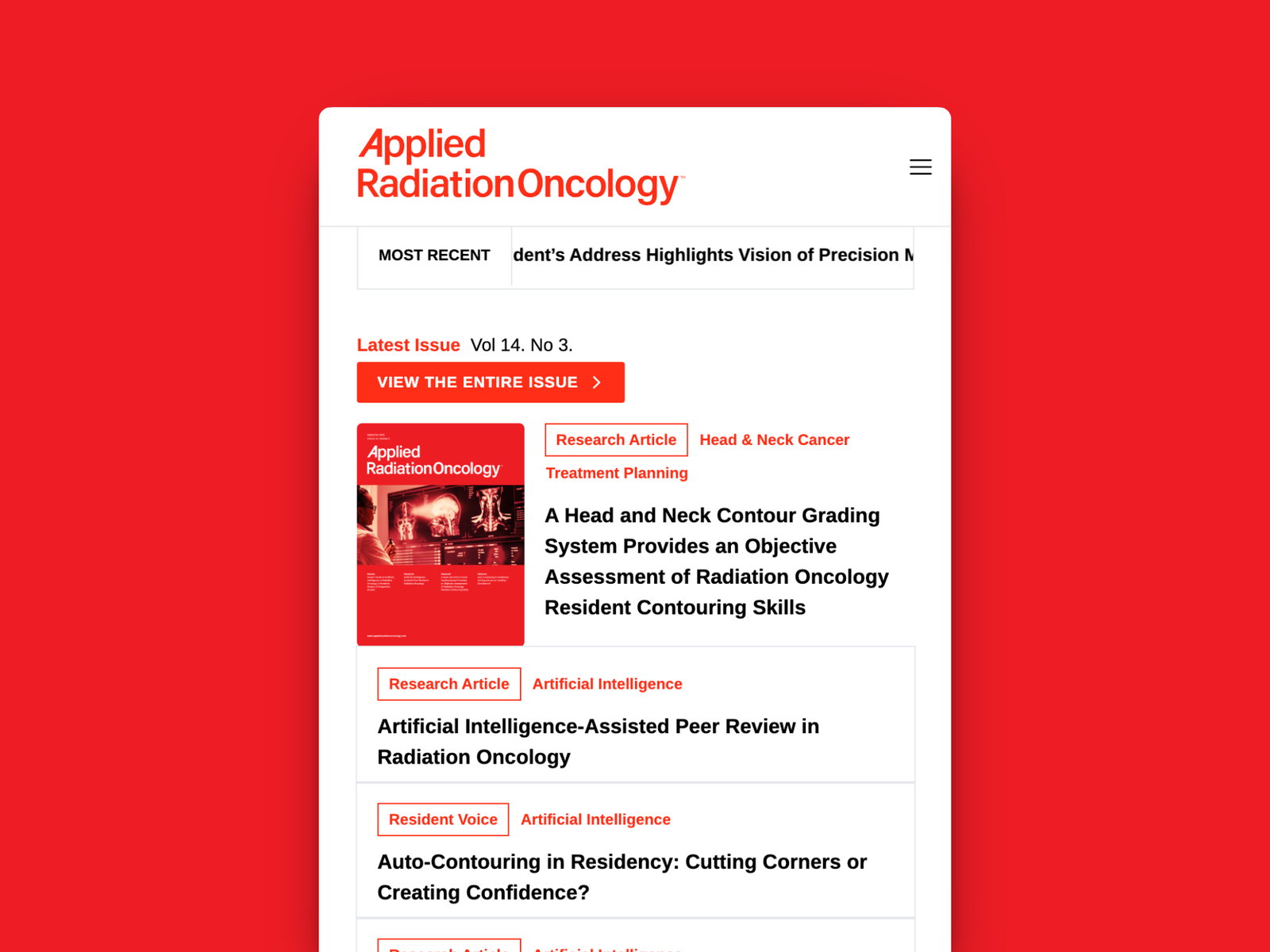
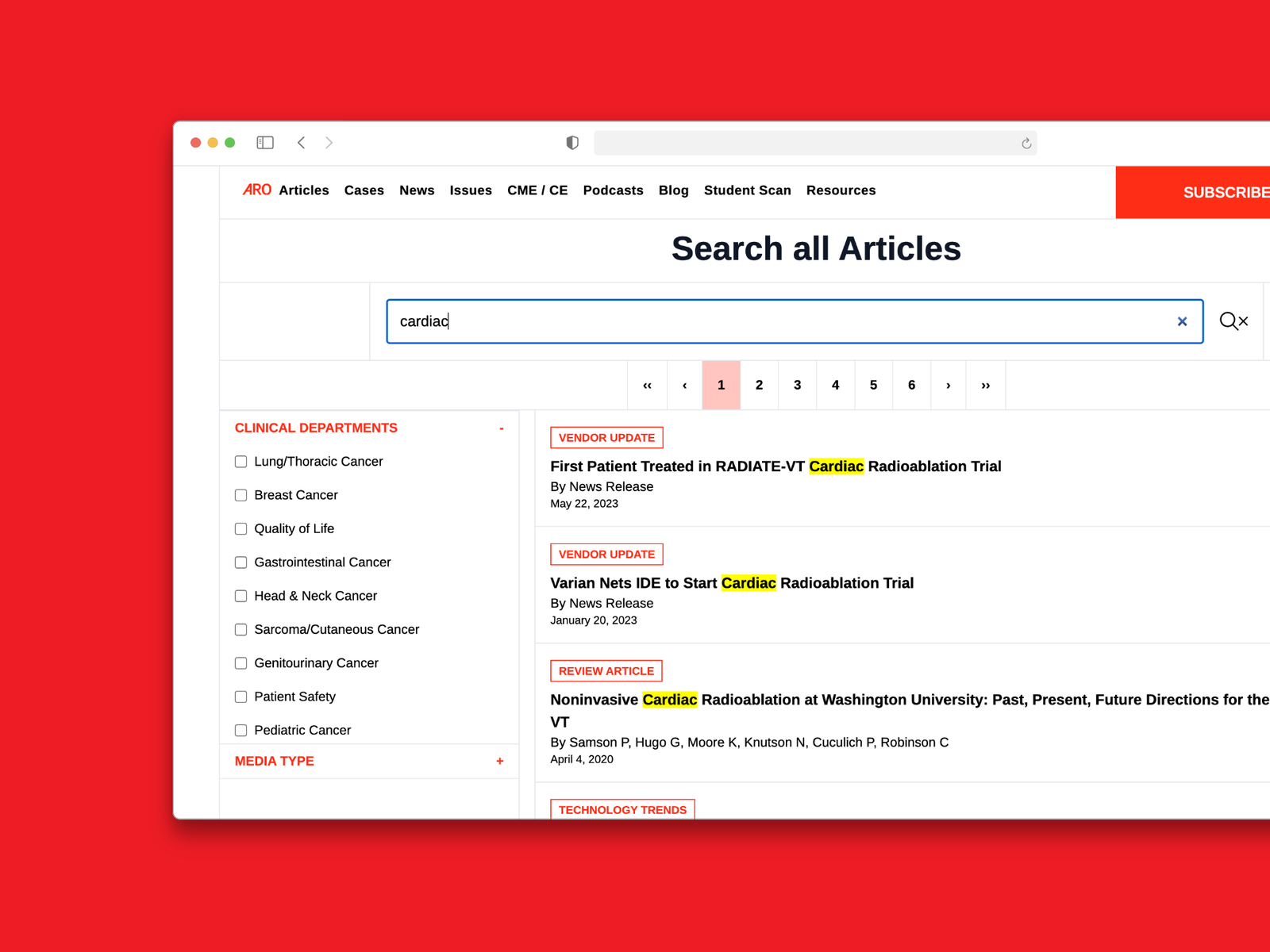
High-performance publishing platform with JATS XML rendering, structured content models and automated editorial workflows.
How we work
Our approach to frontend engineering
Discovery + architecture
We start with your goals, audit existing systems and design the technical architecture: component structure, CMS content model, API integrations and deployment strategy. All before writing a line of code.
Design-to-code fidelity
We work directly from Figma (or your design tool of choice) and build with zero visual compromises. Spacing, typography, colour and interactive states are matched exactly. No 'close enough'.
Iterative delivery
We ship in focused cycles. Each cycle delivers working, deployable features. You review real code in staging so feedback is grounded in reality.
CMS handover + training
We don't just build the CMS integration. We structure content models for editorial clarity, build preview modes for confidence and train your team to publish independently.
Performance + launch
Before launch: Lighthouse audits, Core Web Vitals checks, accessibility testing, SEO validation and redirect mapping. We ship when the numbers are right.
Technologies we work with
Frequently asked questions
Our core stack is React and Next.js, paired with Tailwind CSS for styling, Storyblok or Contentful for headless CMS and Vercel for deployment. We also use TypeScript, GSAP, Framer Motion and Radix UI. The exact combination is shaped by each project's requirements.
Yes. We regularly collaborate with in-house design teams and external agencies. We work directly from Figma files and build to exact spec: pixel-perfect, responsive and production-ready. We can also provide frontend-informed design direction if needed.
We design structured content models in Storyblok or Contentful that work well for both editorial clarity and frontend flexibility. Every content type, field and relationship is planned for how editors will actually use it, then tested with your team before launch.
Pixel-perfect means the production build matches the Figma design file exactly: typography, spacing, colour values, responsive breakpoints and interactive states are all verified by overlaying design on browser output. No approximations.
Yes. We build animation systems with GSAP and Framer Motion including scroll-triggered reveals, page transitions, hover states and loading sequences. Every animation is performance-tested to make sure it enhances the experience without impacting page speed.
SEO and performance are built into the architecture from day one. We use server-side rendering, static generation, structured metadata (JSON-LD, Open Graph), image compression and Core Web Vitals monitoring as standard. We target 95+ Lighthouse performance scores on every project.
A typical marketing site or content platform takes 6–10 weeks from kickoff to launch. Complex web applications with custom integrations take longer. We work in iterative cycles so you review working code weekly and can adjust scope as needed.
Yes. We offer retainer-based ongoing support covering feature development, performance monitoring, CMS updates, dependency maintenance and technical improvements. Most clients start with a build project and transition to a long-term partnership.
Ready to build something that lasts?
Tell us about your project. We'll scope the work, recommend the right stack and show you how we'd approach it.
Services and Capabilities
Explore our other services